

Research team
科研团队

Kang Rui
Certified founder of Belief Reliability, Chang Jiang Scholars
Professor at the School of Reliability and Systems Engineering at Beihang University, and Director of Shenzhen Weimin Reliability Systems Engineering Research Institute
Current
Professor at the School of Reliability and Systems Engineering at Beihang University, and Director of Shenzhen Weimin Reliability Systems Engineering Research Institute
Current
Chairperson of the Reliability Systems Science and Engineering Professional Committee, China Command and Control Society
Chairperson of the Reliability Systems Engineering Professional Committee, MBSE Alliance for Complex Equipment
Chairperson of the Academic Committee, Key National Laboratory of Reliability and Environmental Engineering Technology for National Defense Science and Technology
Chief Scientist of the National Defense Basic Scientific Research Nuclear Science Challenge Program Project: “Research on Fundamental Scientific Issues in Fault Prediction and Health Management for Large-Scale Equipment”
Associate Editor of the U.S. IEEE Transaction on Reliability
Associate Editor of the Journal of Reliability and Risk
For a long time, Professor Kang Rui and his team have been using reliability systems engineering theory to guide the work of Institute 502, Institute 702, Institute 511, Institute 811, and Institute 805 of the China Aerospace Science and Technology Corporation, as well as Huawei Shenzhen, CATL, XCMG Group, CRRC, CGN, and Soft Control Co., Ltd.
Over a hundred enterprises, including certain new-energy bus manufacturers, have been engaged in the development and effective implementation of reliability initiatives, and have repeatedly received Huawei’s Award for Outstanding Collaborative Projects.
He has successively received one Second Prize for National Scientific and Technological Progress, three First Prizes for National Defense Scientific and Technological Progress, and more than ten other provincial- and ministerial-level awards for scientific and technological progress. In 2019, he was awarded the Commemorative Medal jointly presented by the CPC Central Committee, the State Council, and the Central Military Commission in celebration of the 70th anniversary of the founding of the People’s Republic of China.
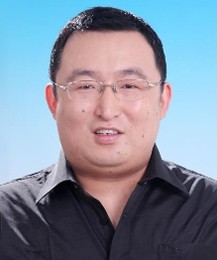
Sun Fuqiang
Associate Professor at the School of Reliability and Systems Engineering at Beihang University, Master’s supervisor, Secretary of the Party Branch of the Teachers’ Group at the Reliability Center, and Head of the Experimental Teaching Center at the School of Reliability and Systems Engineering.
I have been engaged in teaching and research on the forward design and verification of product reliability. I was selected as a Young Top-notch Talent at Beijing University of Aeronautics and Astronautics and have received honors including the Third Prize for Scientific and Technological Progress at the ministerial level, the Outstanding Master’s Thesis Supervisor Award from BUAA, and the Yang Weimin Teaching Award. I have led nearly 20 fundamental research projects—including sub-projects under the National Key R&D Program on “New Energy Vehicles,” the National Natural Science Foundation projects, and key laboratory fund projects—as well as numerous horizontal projects commissioned by enterprises. My research findings have been published in Reliability Engineering.
He has published in internationally renowned journals in the field of reliability, such as System Safety, Quality and Reliability Engineering International, and participated in the drafting of two standards issued by the Aviation Industry Corporation of China: “Reliability Enhancement Testing for Electronic Products” and “Accelerated Performance Degradation Testing for Products.” Under his guidance, students have received awards including the 2020–2021 Excellent Articles from the Journal of Systems Engineering and Electronic, the Outstanding Paper Award at the First Conference on Spacecraft Environmental Engineering, and the title of Outstanding Graduate from Beijing University of Aeronautics and Astronautics.
Currently a member of the Specialized Committee on System Reliability Engineering of the Chinese Society for Systems Engineering, a member of the Specialized Committee on Reliability Science and Engineering of the Chinese Society of Command and Control, and a director of the Fault Diagnosis Specialized Committee of the Chinese Society of Vibration Engineering. From 2015 to 2016, I conducted visiting research at the Department of Industrial Engineering, University of Arkansas in the United States, funded by the China Scholarship Council.
Research areas: Forward design and experimental verification methods for products based on belief reliability theory; theory and application of reliability and accelerated testing; reliability modeling of systems involving multiple degradation processes and competing failure modes due to random shocks; development of reliability and accelerated testing equipment.

Li Xiaoyang
Professor at the School of Reliability and Systems Engineering, Beihang University; Doctoral Supervisor
Member of the Specialized Committee on Criminal Systems Science of the Chinese Society of Command and Control, Deputy Chairperson of the Reliability Systems Engineering Branch of the MBSE Alliance for Complex Equipment, Member of the Specialized Committee on Reliability of the Chinese Society for Systems Engineering, and Executive Director of the Uncertainty Systems Branch of the Chinese Operations Research Society.
Research areas: Reliability theory, reliability testing theory, interdisciplinary research at the intersection of systems medicine and biomedical engineering, and elastic modeling and evaluation of cloud data centers.

Chen Yunxia
Professor at the School of Reliability and Systems Engineering, Beihang University; Doctoral Supervisor
Vice President of the Beijing University of Aeronautics and Astronautics Women Professors Association, Deputy Chairperson of the Reliability Branch of the China Electronics Society, and Deputy Secretary-General of the Equipment and Maintenance Engineering Branch of the China Mechanical Engineering Society.
Research areas: System failure studies, reliability modeling and simulation of complex systems, and design and testing technologies for highly reliable, long-life products.

Zhang Wei
Dr., Associate Professor at the School of Reliability and Systems Engineering, Beijing University of Aeronautics and Astronautics, and Doctoral Supervisor. His research primarily focuses on structural material fatigue and fracture, fatigue reliability, and physics of reliability. He has conducted systematic explorations in the field of mechanical product reliability. He has led three National Natural Science Foundation projects and has either led or participated in more than ten provincial- and ministerial-level projects. His research results have been published in over 50 papers in top journals (such as International Journal of Fatigue, Composite Structures, Mechanical Systems and Signal Processing) and high-level international conferences (including ICF, IFC, AIAA Scitech, APCFS, etc.) in the fields of fatigue fracture, mechanics, and mechanical engineering. From 2012 to 2013, he served as an Assistant Research Scientist in the Department of Aerospace Mechanical Engineering at Arizona State University.

Huang Ning
Professor at the School of Reliability and Systems Engineering, Beihang University; Doctoral Supervisor
Research Direction: Network Reliability

Chen Ying
rofessor at the School of Reliability and Systems Engineering at Beihang University, and Distinguished Expert at the Shenzhen Weimin Reliability Systems Engineering Research Institute.
Chen Ying, who earned her Ph.D. from Tsinghua University, is currently a professor at the School of Reliability and Systems Engineering at Beijing University of Aeronautics and Astronautics, located in California, USA Visiting Scholar at the University of California, Los Angeles (UCLA), primarily engaged in research on failure physics, digital twins for electronic information systems, intelligent diagnostics, and reliability prediction. He teaches several courses at the university level at Beihang University, including the first-class undergraduate course “Fundamentals of Failure Physics,” a core professional course for undergraduates, and the graduate-level core theoretical course “Digital Twins for Electronic Products and Their Applications.” He has led numerous research projects funded by the National Natural Science Foundation, specialized basic research programs, and industry collaborations. To date, he has published over 80 papers, been granted more than 40 invention patents, and authored or co-authored several monographs and textbooks, including “FMECA Technology and Its Applications,” “Failure Physics,” and “Reliability Analysis and Risk Assessment for Electronic Products.” He has received the First Prize for Scientific and Technological Progress at the provincial and ministerial levels, the Second Prize for Scientific and Technological Progress at the provincial and ministerial levels, the Beijing Science and Technology Award, the Beihang Teaching Achievement Award, and has been recognized as an outstanding supervisor of doctoral and master’s theses at Beihang University. He serves as a member of the Reliability Systems Engineering Specialist Committee of the Chinese Society of Command and Control, a specially appointed expert at the Shenzhen Weimin Reliability Systems Engineering Research Institute, and the chief expert in the electronics field at the Xiamen Lanwei Reliability Systems Engineering Research Institute.
Research areas: Physics of failure, digital twins for electronic information systems, intelligent diagnostics, and reliability prediction, etc.

Liu Jie
Associate Professor at the School of Reliability and Systems Engineering at Beihang University, currently serving as Assistant Dean of the School of Reliability and Systems Engineering. Has published over 60 SCI papers in the fields of trustworthy fault diagnosis and life prediction, with a total WoS citation count exceeding 900. One of his papers was selected as one of the 100 high-quality papers at the inaugural Conference on High-Quality Development of Scientific and Technological Journals in 2023. He has authored the monograph “Adaptive Fault Prediction and Its Applications in Nuclear Power Plants” and co-authored the translated book “Cognition in Risk Assessment and Management.” He has led one project funded by the National Natural Science Foundation of China, one special research project on high-quality development sponsored by the Ministry of Industry and Information Technology, one Aviation Fund project, two projects funded by national key laboratories, two projects under the Talent Support Program of Beijing University of Aeronautics and Astronautics, and numerous horizontally commissioned projects from enterprises. He holds 9 authorized patents and 3 software copyrights.
Selected for Stanford University’s annual list of the world’s top 2% scientists and named a Xiaomi Young Scholar; received the First Prize for Scientific and Technological Progress at the provincial and ministerial levels, as well as the Second Prize in Natural Sciences from the Chinese Aeronautical Society; awarded the Second Prize for National Teaching Achievements and the First Prize for Beijing Municipal Teaching Achievements; recognized as an Outstanding Class Advisor and an Outstanding Instructor for Industrial Internships at the university level; students have won one university-level Award for Outstanding Innovation Achievements, two National Graduate Scholarships, one university-level Award for Outstanding Master’s Theses, and placed third in the Feng Ru Cup competition once.

Zhang Qingyuan
Ph.D. in Engineering, Associate Professor (on tenure-track) at the International Institute for Innovation Research, Beijing University of Aeronautics and Astronautics, Hangzhou. Main research areas include belief reliability theory, systems engineering and forward reliability design, uncertainty quantification and analysis, and aviation safety.
Publications: Over 20 SCI papers and over 10 EI papers have been published. The total number of citations in the Web of Science database exceeds 300, and the total number of citations in Google Scholar exceeds 500.
Monographs and Translated Works: Participated in writing one Chinese monograph (as the primary author); led the publication of one translated work (published by Springer, a leading international academic publisher, and supported by the “Silk Road Book Award” publishing fund from the Publicity Department of the CPC Central Committee); participated in the translation of two English-language monographs. Invention Patents: 25 invention patents have been authorized.
Project Topics: I have successively led or participated in more than 10 basic research projects and industry-academia collaborative projects, including the China Postdoctoral Science Foundation, the National Natural Science Foundation of China, the GF Basic Scientific Research Nuclear Science Challenge Program, and the Key Laboratory Fund for Reliability and Environmental Engineering.
Academic Awards: Received the Outstanding Doctoral Dissertation Award from Beijing University of Aeronautics and Astronautics; received the Highly Influential Paper Award from the Chinese Journal of Aeronautics, sponsored by the Chinese Aeronautical Society; received the Third Prize for Scientific and Technological Progress from Yunnan Province.
Teaching: Since 2024, I have been teaching the all-English courses “Operations Research” and “Reliability Engineering and System Safety” for the Beihang–ENAC dual-degree program. I also teach the experimental courses at the Institute of National Innovation—“Semi-physical Simulation Flight Experiments for Multirotor UAV Swarms” and “Multidisciplinary System Modeling and Optimization.” From 2021 to 2023, I continuously taught the section on belief-based reliability modeling in the graduate elective course “Theory and Applications of Belief Reliability.” In the 2023–2024 academic year, I taught the sections on reliability science principles and positive reliability design in the undergraduate required course “Introduction to Reliability Science and Engineering.” I was awarded an excellent teaching demonstration in the Beihang Young Teachers’ Training Program.
Prize.
Social Services: Led the development of 14 standards for reliability system engineering in manufacturing. These standards were released to the public at the “Bay Area Manufacturing—Reliability First” thematic forum during the 24th China Hi-Tech Fair, hosted by the Shenzhen Institute for Reliability System Engineering for the People. The initiative received enthusiastic responses and active participation from over 130 enterprises. Also, took charge of providing reliability technology training and consulting services totaling more than 150 hours for enterprises and institutions including CGN, Aeroengine Research Institute, CATL, and JPT Optoelectronics.
Research areas: Reliability theory, systems engineering and forward reliability design, uncertainty quantification and analysis, aviation safety.

Zu Tianpei
Ph.D. in Engineering, Associate Professor (on tenure-track) at the International Institute for Innovation Research, Beijing University of Aeronautics and Astronautics, Hangzhou. Main research areas include belief reliability theory, uncertainty quantification methods, multi-source data fusion, integrated support optimization, and flight route planning.
Monographs and Translated Works: Participated in the authorship of 1 Chinese monograph (as a primary author), and participated in the translation of 1 English monograph.
Invention patents: 7 authorized invention patents, 14 invention patent applications pending.
Project Topics: Led one National Natural Science Foundation of China Young Scientists Fund project and one key experimental fund project (at provincial or ministerial level); participated in more than 10 basic research projects funded by the National Natural Science Foundation and horizontal projects commissioned by enterprises.
Teaching: Course leader of the graduate-level compulsory course “Mathematical Statistics (English)”; course leader of the core professional course “Air Transport Economics (English)”; course leaders of the experimental and practical courses “Fault Prediction and Health Management Simulation Experiment” and “Fleet Maintenance and Operations Simulation Experiment.”
Research areas: Reliability theory, uncertainty quantification methods, multi-source data fusion, integrated support optimization, and route planning.

Jin Yi
● Graduated with a bachelor’s degree from the School of Aerospace and Civil Engineering at Harbin Engineering University, and earned both a master’s and doctoral degree from the Reliability Department at Beijing University of Aeronautics and Astronautics Associate Researcher with Tenure-Track Appointment at the School of Systems Engineering, Hangzhou Beihang International Institute for Innovation (School); Visiting Expert at Shenzhen Weimin Reliability Research Institute.
● Primarily engaged in research on identifying and characterizing typical failure mechanisms, modeling failure propagation paths and evolution patterns, and designing and validating high-reliability, long-life metrics based on physics-of-failure approaches. Has successively participated in the design and development of military equipment such as a certain aviation engine transmission system and space power energy storage systems, as well as civilian equipment represented by the next-generation electric power steering system.
● Published 7 academic papers in domestic and international peer-reviewed journals including Mechanical Systems and Signal Processing, Reliability Engineering & System Safety, and IEEE Transactions on Industrial Electronics; obtained 7 authorized invention patents; received the Second Prize for Technological Invention from the Chinese Institute of Electronics in 2022 (ranked 3rd); won the Second Prize for Outstanding Academic Paper in Natural Sciences from Taizhou City; published 1 monograph under the “13th Five-Year Plan” National Key Publication Program (“Life Design and Testing Technologies for Mechanical Products”) as the second author; co-authored 2 standards issued by Aviation Industry Corporation of China as the second and third contributors, respectively; and provided reliability-related technical services—including training and consulting— to enterprises across various industries such as electromechanical engineering and new energy.

